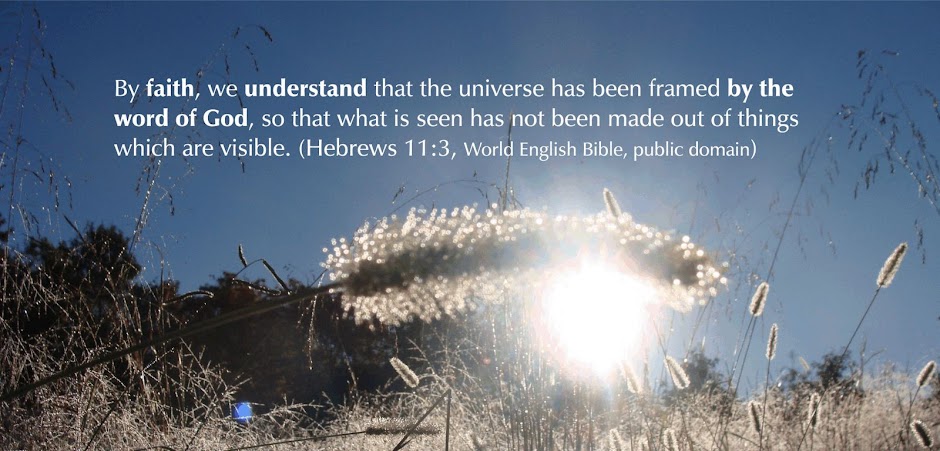
Things I have recently spotted that may
be of interest to someone else:
Christianity: A fine article by a historian of science, on the question of whether
God had any choices when He made the world, based on the thoughts of
Galileo and Boyle, two of the greatest scientists of the past.
Computing: Gizmo's Freeware reports on a web page that helps you
send out a newsletter, free.
If you are a Facebook member, Facebook automatically puts together a short video of your most popular posts.
Science: Nature says that the
Lacks family, and the National Institutes of Health, have reached
an agreement over the question of publishing the DNA sequence of HeLa
cells, the most important human cell culture. These cells were taken, without the consent or knowledge of Henrietta Lacks, decades ago. Oprah
Winfrey's film company is making a file of the story of Mrs. Lacks, and her cells.
National Public Radio reports that modern humans (many of them, anyway) are carrying genes
from Neanderthals.
NPR also reports on what
happens to our actual achievement when our self-esteem is artificially boosted, or lowered. Perhaps not what you'd expect.
Image
source (public domain)
Musings on science, the Bible, and fantastic literature (and sometimes basketball and other stuff).
God speaks to us through the Bible and the findings of science, and we should listen to both types of revelation.
The title is from Psalm 84:11.
The Wikipedia is usually a pretty good reference. I mostly use the World English Bible (WEB), because it is public domain. I am grateful.
License
I have written an e-book, Does the Bible Really Say That?, which is free to anyone. To download that book, in several formats, go here.

The posts in this blog are licensed under a Creative Commons Attribution-NonCommercial-ShareAlike 3.0 Unported License. You can copy and use this material, as long as you aren't making money from it. If you give me credit, thanks. If not, OK.
Showing posts with label self-esteem. Show all posts
Wednesday, February 05, 2014
Sunspots 456
Labels:
Choice,
Facebook,
God's creation,
Henrietta Lacks,
links,
Neanderthals,
self-esteem
Saturday, October 30, 2010
Affirmation can be misdirected
In a previous post, I argued that modern society does not affirm people and things as much as it should. I also quoted from the Bible, two verses which indicated that we should affirm -- praise, try to imitate, think about -- what is good.
But there's another side to this. Affirmation can be misdirected.
One type of misdirected affirmation was (and probably still is) a movement to try to increase the self-esteem of elementary school students. (Surely you have been in towns where half the automobile bumpers seem to proclaim some child or other as an honor student?) As the Wikipedia article that the previous link points to indicates, there is no solid evidence that acting so as to increase a child's self-esteem makes for better academic achievement.
It is a terrible mistake to act and speak so as to attack a person's self-esteem, particularly that of a child. But it is also a terrible mistake to lead a child to believe that he or she is a budding genius, athlete, or artist of some sort, when they are not, and show no evidence of ability and ambition toward such a goal. Telling a child who can't read at their grade level, and who does not seem to have any desire to, that she is going to become a lawyer or a doctor is a mistake. Telling a college Junior who barely gets Cs that he should expect to become a dentist is an error.
What should be put up for admiration and esteem is excellence. If the child shows evidence of working hard toward some sort of excellence, then that, too, should be affirmed, but misbehavior and laziness should not.
The same thing is true of adults. In Matthew 22:34-39, Jesus, quoting the Old Testament, tells us that we should love our neighbors as we love ourselves. We should have proper self-esteem -- a realistic view of our failings, and also of our likeness to Christ, which latter should be affirmed. Not publicly, not boastfully, but recognized and encouraged. Our goal should be to have an ambition to become more like Christ. All Christians have such ability. Would that I acted on it more.
Thanks for reading.
But there's another side to this. Affirmation can be misdirected.
One type of misdirected affirmation was (and probably still is) a movement to try to increase the self-esteem of elementary school students. (Surely you have been in towns where half the automobile bumpers seem to proclaim some child or other as an honor student?) As the Wikipedia article that the previous link points to indicates, there is no solid evidence that acting so as to increase a child's self-esteem makes for better academic achievement.
It is a terrible mistake to act and speak so as to attack a person's self-esteem, particularly that of a child. But it is also a terrible mistake to lead a child to believe that he or she is a budding genius, athlete, or artist of some sort, when they are not, and show no evidence of ability and ambition toward such a goal. Telling a child who can't read at their grade level, and who does not seem to have any desire to, that she is going to become a lawyer or a doctor is a mistake. Telling a college Junior who barely gets Cs that he should expect to become a dentist is an error.
What should be put up for admiration and esteem is excellence. If the child shows evidence of working hard toward some sort of excellence, then that, too, should be affirmed, but misbehavior and laziness should not.
The same thing is true of adults. In Matthew 22:34-39, Jesus, quoting the Old Testament, tells us that we should love our neighbors as we love ourselves. We should have proper self-esteem -- a realistic view of our failings, and also of our likeness to Christ, which latter should be affirmed. Not publicly, not boastfully, but recognized and encouraged. Our goal should be to have an ambition to become more like Christ. All Christians have such ability. Would that I acted on it more.
Thanks for reading.
Subscribe to:
Posts (Atom)
