License

I have written an e-book, Does the Bible Really Say That?, which is free to anyone. To download that book, in several formats, go here.
Creative Commons License
The posts in this blog are licensed under a Creative Commons Attribution-NonCommercial-ShareAlike 3.0 Unported License. You can copy and use this material, as long as you aren't making money from it. If you give me credit, thanks. If not, OK.
Showing posts with label heart. Show all posts

Thursday, September 21, 2023

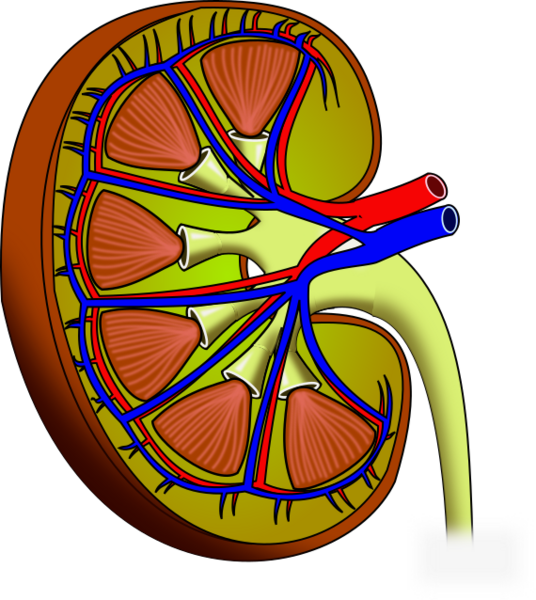
Is the science of the Bible always correct? The role of the kidneys

File:Kidney.png

(Image from Wikimedia Commons)

The Blueletter Bible has this entry for the Hebrew word kilyâ. It translates that word as the kidneys, or the reins. "Reins" is not a word much in use in our day -- the Blueletter Bible uses the King James as its default version. However, its use in the Bible seems to refer to a function analogous to the reins used in guiding a horse. The reins control what we are thinking of, do, and say. 

Referring to Strong's concordance, the Blueletter Bible says "kidney (as an essential organ); figuratively, the mind (as the interior self):—kidneys, reins." Looking further in the Blueletter Bible's entry for kilyâ, there are 31 instances of that word in the Hebrew Bible. Many of these are in relation to the body parts of a sacrificial animal, and seem, therefore, to use the word for kidney as we would do so today. But there are other uses. Here are some: (Scripture is from the World English Bible, with the translation results from kilyâ given in bold:)

Psalm 7:9 Oh let the wickedness of the wicked come to an end,
    but establish the righteous;
    their minds and hearts are searched by the righteous God.

Psalm 26:2 Examine me, Yahweh, and prove me.
    Try my heart and my mind.

Proverbs 23:16 Yes, my heart will rejoice
    when your lips speak what is right. 

Jeremiah 11:20a But, Yahweh of Armies, who judges righteously,
    who tests the heart and the mind

The people of Bible times thought that the kidneys were the seat of the consciousness, the engineer, as it were, of the personal locomotive. And, as we often still do, they thought of the physical heart in the same way.

There is, and was, nothing seriously wrong with believing that the kidneys, or the heart, are the engineer of our consciousness, as in, for example: "I asked Jesus into my heart." But, if you think that the science of Bible times must agree with current scientific thought, there is something wrong. The Bible was written, at least partly, for a current audience, using the science of the day. That doesn't mean that the Bible is in error. It just means that the Bible conforms to the culture of ancient times. It doesn't expect or demand that we have to think of the brain as the seat of consciousness.

There are previous posts, making the same argument for ancient science, on the firmament, or expanse, on the liver, and on the size of mustard seeds

Thanks for reading!

*The graphic was added on October 30, 2023.

Wednesday, June 06, 2018

Sunspots 680


Things I have recently spotted that may be of interest to someone else:


The Arts: (Including pornography -- never mind whether it's art or not!) An article in Speculative Faith warns that thinking you are oblivious to pornography and questionable visual stimuli is not a sign of Christian maturity. For part 1 of this series, see here.

Computing: A primer on typography, for those not expert in the selection and use of typefaces.

UnDark debunks the idea of "technology addiction."

Gizmo's Freeware tells us how to delete the conversations we have with digital assistants, such as Alexa.

Gizmodo considers the question of how many social media users are real, and how many are not.


Education: Scientific American debunks the value of so-called "learning styles."

Health: Gizmodo reports on studies of the effect of dietary supplements on heart health, which found that such supplements did not have a positive effect.

Gizmodo also reports that one-fifth of 20-30's deaths in the US are now caused by opioids.

Politics: (or something) Relevant reports that some Liberty University students and staff are working with a producer who is filming something called The Trump Prophecy. It is claimed that this film won't be political, which is hard to imagine.


Sports: FiveThirtyEight analyzed the loss of the Houston Rockets to the Golden State Warriors in the National Basketball Association's western conference final series, seventh game, where the Rockets, usually a good 3-point shooting team, missed 26 3's in a row.

FiveThirtyEight also discusses Kevin Durant's propensity to lose a shoe during an NBA game.

Thanks for looking!

Image source (public domain)

Sunday, November 07, 2010

Solzhenitsyn on the heart

Solzhenitsyn on the heart

(The photo is a link to my Flickr original photo, which has a larger size. No password is needed to see it.)

Wikipedia's article on Solzhenitsyn is here.

Tuesday, November 10, 2009

Heartbeat at 18 days?

While on a recent trip to Florida, I saw a number of billboards, saying that an embryo had a heart at 18 days of age.

I could not find this ad campaign on the Internet, but I found a web page, which makes this claim, among others: "18 days after conception the baby's heart is beating." The organization's web site indicates that this is an Irish pro-life organization. (By September 28, 2013, this web page had been removed, which is hardly surprising, considering the nearly four years since I saw it.)
Both the web site and the billboard campaign show a picture of a fetus, not an embryo. (The human becomes a fetus at eight weeks of pregnancy.) So does the heart really beat at 18 days?

The Wikipedia article on prenatal development is a good source for answering this question. It's a little confusing, because it gives both the age of the embryo/fetus and the gestational age, which is the time since the last menstruation.

According to that source, "Primitive heart tube is forming. Vasculature begins to develop in embryonic disc." at 20 days after fertilization, not 18 days. (Vasculature means the blood vessels needed for circulation.) The heart begins to beat between 22 and 28 days after fertilization. However, the first sign of a working circulatory system is later than that, at between days 29 and 35.

The billboard campaign, and the web page, seem to be wrong. The heart doesn't begin to beat until later than 18 days after fertilization, and it doesn't really start to function until even later than that. Besides, the graphic in both the web page and the billboard show a fetus, probably at least 12 weeks old, not an embryo at all.

There are reasons for arguing that unborn human entities should be protected, and I won't consider the validity of those reasons here. But, even if those reasons were completely uncontroversial arguments, that would not excuse the use of distortion in support of protecting embryos or fetuses, and that, unfortunately, is what the pro-life community has done, in the two instances described, and, I'm afraid, in other cases.

Thanks for reading. See here for a more comprehensive view of my thoughts on abortion.

Sunday, March 02, 2008

In the Forests of Serre by Patricia McKillip, re-done

Patricia A. McKillip is one of my favorite fantasy authors. I have written elsewhere about one reason that I like her work, namely that much of it involves a main character deciding not to seek revenge. (I suppose that makes her novels, with this aspect important, Christian, in a sense.)

Here's what another blogger wrote about her use of words:

Words seem ironically inadequate to describe the skill with which McKillip spins the English language into magic. Lyrical is one word that is often used in reviews, but it's so much more. Most of McKillip's work deals with magic, and if there is any true magic in the world, I would suspect it would be found in her use of language. I could luxuriate in work written by McKillip regardless of the story, simply to enjoyher use of words.

I agree. It is also true that McKillip can be obscure, and leave quite a bit unexplained.

In the Forests of Serre (New York: Ace, 2003) is a book that I have read four times since I got it from one of our daughters for Christmas. I believe that I have finally gotten a handle on it, and it's not McKillip's fault that it took me so long. The central theme is the heart. The word, referring to the seat of the emotions, is used over and over again, and two of the main characters give up their hearts for something else, and regret this. (They get them back.) Here are two items of evidence:

The queen's voice cut sharply at him, cold and edged with astonishment. "What is the matter with you? You came out of that forest as heartless as your father." (p. 203). Queen Calandra is Prince Ronan's mother, and married to King Ferus of Serre, who has no love, or empathy, for anyone else, certainly including his wife and only son.

He had thought the wizard's last battle would be a tale of terror and courage, feats of unimaginable magic performed with heart-stopping skill and passion, good and evil as clearly defined as midnight and noon, a heroic battle for life and hope against the howling monster that left death in every footprint and ate life to fill the unfillable void where its heart had been. Instead he was trapped in the middle of something grisly, ugly, dreary, that ate into his own heart word by word until he could scarcely stand to look at himself. (212)

"This monster, when it could not kill me, reached into me and broke my heart. . . ." (213. The Wizard Unciel has described his battle with a monster to Euan Ash, the scribe who is working for Unciel. The wizard needs all sorts of help, because he has been weakened physically and emotionally, almost to the point of death.)

I don't see how I can summarize the plot, or even describe the characters (there are nine that I would consider main characters) in anything like a post length that's reasonable, even for me. So I'll just summarize the book this way:

McKillip has again written a book with excellent use of language, describing a marvelous forest, wizardry, and a cold castle. The Princess Sidonie decides that she doesn't want to marry Prince Ronan unless he re-claims his heart. He gave it away because his first wife and child died. After numerous trips, by several characters, into and through the forest, all is well. Everyone who should have a heart does, and the two really can fall in love and be married.

Three themes that I have found in some of McKillip's other work, namely rejection of vengeance, being visible in plain sight, and having someone strange in a character's pedigree, are not prominent in this book.

I hope that my heart is present, and doing what it's supposed to do.
Proverbs 4:23 Keep your heart with all vigilance,
for from it flow the springs of life. (ESV)

Thanks for reading. Much of this post comes from a previous one.

Saturday, January 21, 2006

Heart in the Bible

According to a Blue Letter Bible search, the word, "heart," occurs in the KJV Bible 830 times in 762 verses. I didn't read through all of these, but it looks like all, or nearly all, of these are in the sense of "the center of the will," or "the seat of the emotions." The first occurrence is Gen 6:5 "And GOD saw that the wickedness of man [was] great in the earth, and [that] every imagination of the thoughts of his heart [was] only evil continually." (KJV) Only 98 of the 762 verses are in the New Testament. The Blue Letter Bible says that the Hebrew word was lebab, or some variation thereof.

Here's an important passage, from Mark 12:30 "And thou shalt love the Lord thy God with all thy heart, and with all thy soul, and with all thy mind, and with all thy strength: this [is] the first commandment." (KJV) This is part of a dialogue between Jesus and a teacher of the law, and Jesus is quoting Deuteronomy 6:4, and responding to the teacher's question about what part of the law is most important. The teacher agrees.

A previous post is on the heart, in the same sense. The Wikipedia's "disambiguation page" on heart lists the two important meanings, namely a "muscular organ" and "Symbolism and Metaphor," as well as some which are much less important. The article on the heart in symbolism begins with a reference to the Bible, and says that Bible use of the word is as "the moral core of a human being including the intellect and not just the emotions," referencing JewishEncyclopedia.com on that point.

The Online Etymology Dictionary says that heart, or a recognizable predecessor, has been around since Proto-Indo-European, perhaps 5500 years ago.

What is the physical seat of the emotions, the center of the will, if there is such a physical seat? I don't believe we have any scientific evidence that definitely locates such, but would suppose that it is some part of the cerebral cortex, or the entire brain. I don't suppose it matters much whether or not there is such a specific location. We act as if there was one, and mostly believe that there is.

Some time ago, I posted on a work of fantasy by Patricia A. McKillip, concluding that the theme concerned the heart.