License

I have written an e-book, Does the Bible Really Say That?, which is free to anyone. To download that book, in several formats, go here.
Creative Commons License
The posts in this blog are licensed under a Creative Commons Attribution-NonCommercial-ShareAlike 3.0 Unported License. You can copy and use this material, as long as you aren't making money from it. If you give me credit, thanks. If not, OK.
Showing posts with label concordism. Show all posts

Thursday, September 21, 2023

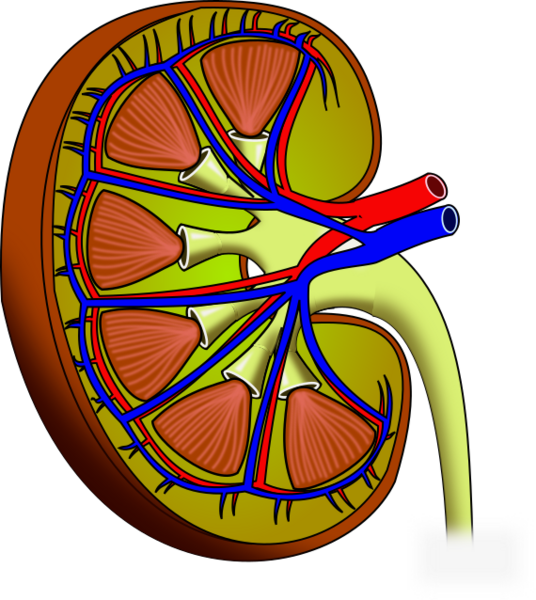
Is the science of the Bible always correct? The role of the kidneys

File:Kidney.png

(Image from Wikimedia Commons)

The Blueletter Bible has this entry for the Hebrew word kilyâ. It translates that word as the kidneys, or the reins. "Reins" is not a word much in use in our day -- the Blueletter Bible uses the King James as its default version. However, its use in the Bible seems to refer to a function analogous to the reins used in guiding a horse. The reins control what we are thinking of, do, and say. 

Referring to Strong's concordance, the Blueletter Bible says "kidney (as an essential organ); figuratively, the mind (as the interior self):—kidneys, reins." Looking further in the Blueletter Bible's entry for kilyâ, there are 31 instances of that word in the Hebrew Bible. Many of these are in relation to the body parts of a sacrificial animal, and seem, therefore, to use the word for kidney as we would do so today. But there are other uses. Here are some: (Scripture is from the World English Bible, with the translation results from kilyâ given in bold:)

Psalm 7:9 Oh let the wickedness of the wicked come to an end,
    but establish the righteous;
    their minds and hearts are searched by the righteous God.

Psalm 26:2 Examine me, Yahweh, and prove me.
    Try my heart and my mind.

Proverbs 23:16 Yes, my heart will rejoice
    when your lips speak what is right. 

Jeremiah 11:20a But, Yahweh of Armies, who judges righteously,
    who tests the heart and the mind

The people of Bible times thought that the kidneys were the seat of the consciousness, the engineer, as it were, of the personal locomotive. And, as we often still do, they thought of the physical heart in the same way.

There is, and was, nothing seriously wrong with believing that the kidneys, or the heart, are the engineer of our consciousness, as in, for example: "I asked Jesus into my heart." But, if you think that the science of Bible times must agree with current scientific thought, there is something wrong. The Bible was written, at least partly, for a current audience, using the science of the day. That doesn't mean that the Bible is in error. It just means that the Bible conforms to the culture of ancient times. It doesn't expect or demand that we have to think of the brain as the seat of consciousness.

There are previous posts, making the same argument for ancient science, on the firmament, or expanse, on the liver, and on the size of mustard seeds

Thanks for reading!

*The graphic was added on October 30, 2023.

Thursday, February 25, 2021

Denis Lamoureux on the Bible and ancient science

Denis Lamoureux has written a good book. The title is The Bible & Ancient Science: Principles of Interpretation. (Note that there's an ampersand, not an "and" in the title.) The point, made over and over, by analyzing the original language of the Bible, is that the Bible was written from the standpoint of ancient science.

Lamoureux discusses the statement, by Jesus, that the mustard seed is the smallest seed (it isn't) in Mark 4:30-32. Jesus wasn't teaching botany, nor was He mistaken, or lying. He was speaking to the people of the day, using the knowledge that they had. The message, about the Kingdom, was far more important than the size of the seed.
 

The author also discusses the beliefs of Biblical writers on human reproduction. They thought that a woman was merely a sort of field, where the male implanted something which grew into a child. Infertility was always the "fault" of the woman. The Bible reflects that belief. Again, the Bible isn't a text on human reproduction. It's a text on God's plan of redemption, and false beliefs about peripheral issues are just that, peripheral.

Another item. The Biblical authors thought that the earth was circular and flat, surrounded by water, and that there was a solid firmament above it. But Genesis 1-2 isn't a textbook of astronomy, geology, meteorology or oceanography. It was written from the standpoint of the beliefs of the people of the day, and tells us that God is creator, that the creation was good, that humans sinned and need a Redeemer. There is no firmament, even though the Bible writers thought that there is. The earth is not flat -- careful study of the Hebrew of the Bible, which Lamoureux appears well-qualified to do, shows that the Bible does not teach that the earth is a globe, but describes it as if it was flat.


(The illustration above is not from the book)

Lamoureux, like many others, points out that the apparent sequences of events in Genesis 1 vs. 2 seem to be contradictory. But Genesis 1-2 was not meant to be taken as a literal, step-by-step account (or accounts) of what happened at the beginning, and it isn't that. Does this downgrade the Bible, or the Gospel? No, argues Lamoureux. The first part of Genesis was made to teach eternal truths, namely that one God created, without using stuff from some other entity, that creation was good, and that sin entered the world.

Although he doesn't mention Ken Ham and Answers in Genesis much, the book demonstrates that the AiG thesis, that the earth is only a few thousand years old, is not really based on scripture, in spite of what AiG believes  the Bible says. Lamoureux directly criticizes the writings of Henry Morris, the most important young-earth creationist of the 20th century, for the same reason -- he took Bible passages that were not meant to be taken literally, and not meant to describe the world in terms that we would use now, and took them literally, and as if they describe the world as we now understand it.

There's more serious, and good, thinking and teaching in the book.

I was pleased to be able to read this in Kindle format, using my Kindle Unlimited membership. But the Kindle version's type size was almost too small to read on my 9 inch tablet, and, unlike most books in Kindle format, the type size can't be changed on this one. 

Thanks for reading. Read Lamoureux.

Friday, April 20, 2012

The Panda's Thumb on accomodating evolution and Christianity

The Panda's Thumb is a prominent, and important, blog, authored by many people, mostly scientists. Its most common theme is attacking the Intelligent Design movement. (I am not a fan of the ID movement myself. I do believe that there is a Designer, who did some designing. See here.)

A recent post in the Panda's Thumb, seriously criticizes Jerry Coyne, an evolutionary biologist and self-proclaimed atheist. According to the Wikipedia article on him, which is linked to in the previous sentence, "He claims that religion and science are incompatible. . ."

Nick Matzke, criticizing Coyne, points out that two of the most important evolutionists ever did not make such claims. One such was Theodosius Dobzhansky, who famously wrote "Nothing in Biology Makes Sense Except in the Light of Evolution." The title of that article is often used today, in writing about origins, even though the article is nearly 40 years old. When I was a graduate student in genetics, I was urged to read Dobzhansky's Genetics and the Origin of Species, and I did. It was an important book.

The other evolutionist was no less than Darwin, himself.

Matzke does not claim that either Dobzhansky or Darwin believed in a personal God, or in Christ's redemptive work, simply that they believed that there could be accomodation between a belief in evolution by natural selection and Christianity -- belief in one does not have to negate belief in the other. He merely claims, with solid documentation and appropriate quotation, that Coyne's claim about incompatibility is a real stretch.

Thanks for reading. Read Matzke.

Monday, April 16, 2012

Blaise Pascal on Thomas Aquinas, St. Augustine, and supposed conflicts between science and scripture

Blaise Pascal, in Letter XVIII of his Provincial Letters,  had something important to say about misinterpreting the Bible, and about seeming conflicts between the Bible and scientific findings:

In what way, then, are we to learn the truth of facts? It must be by the eyes, father, which are the legitimate judges of such matters, as reason is the proper judge of things natural and intelligible, and faith of things supernatural and revealed. For, since you will force me into this discussion, you must allow me to tell you that, according to the sentiments of the two greatest doctors of the Church, St. Augustine and St. Thomas, these three principles of our knowledge, the senses, reason, and faith, have each their separate objects and their own degrees of certainty. And as God has been pleased to employ the intervention of the senses to give entrance to faith (for "faith cometh by hearing"), it follows, that so far from faith destroying the certainty of the senses, to call in question the faithful report of the senses would lead to the destruction of faith. . . .

We conclude, therefore, from this, that whatever the proposition may be that is submitted to our examination, we must first determine its nature, to ascertain to which of those three principles it ought
to be referred. If it relate to a supernatural truth, we must judge of it neither by the senses nor by reason, but by Scripture and the decisions of the Church. Should it concern an unrevealed truth and something within the reach of natural reason, reason must be its proper judge. And if it embrace a point of fact, we must yield to
the testimony of the senses, to which it naturally belongs to take cognizance of such matters.
So general is this rule that, according to St. Augustine and St. Thomas, when we meet with a passage even in the Scripture, the literal meaning of which, at first sight, appears contrary to what the senses or reason are certainly persuaded of, we must not attempt to reject their testimony in this case, and yield them up to the authority of that apparent sense of the Scripture, but we must interpret the Scripture, and seek out therein another sense agreeable to that sensible truth; because, the Word of God being infallible in the facts which it records, and the information of the senses and of reason, acting in their sphere, being certain also, it
follows that there must be an agreement between these two sources of knowledge. And as Scripture may be interpreted in different ways, whereas the testimony of the senses is uniform, we must in these matters adopt as the true interpretation of Scripture that view which corresponds with the faithful report of the senses. "Two things," says St. Thomas, "must be observed, according to the doctrine of St. Augustine: first, That Scripture has always one true sense; and secondly, That as it may receive various senses, when we have
discovered one which reason plainly teaches to be false, we must not persist in maintaining that this is the natural sense, but search out another with which reason will agree.

St. Thomas explains his meaning by the example of a passage in Genesis where it is written that "God created two great lights, the sun and the moon, and also the stars," in which the Scriptures appear to say that the moon is greater than all the stars; but as it is evident, from unquestionable demonstration, that this is false,
it is not our duty, says that saint, obstinately to defend the literal sense of that passage; another meaning must be sought, consistent with the truth of the fact, such as the following, "That the phrase great light, as applied to the moon, denotes the greatness of that luminary merely as it appears in our eyes, and not the magnitude of its body considered in itself."

An opposite mode of treatment, so far from procuring respect to the Scripture, would only expose it to the contempt of infidels; because, as St. Augustine says, "when they found that we believed, on the authority of Scripture, in things which they assuredly knew to be false, they would laugh at our credulity with regard to its more recondite truths, such as the resurrection of the dead and eternal life." "And by this means," adds St. Thomas, "we should render our religion contemptible in their eyes, and shut up its entrance into their minds.
And let me add, father, that it would in the same manner be the likeliest means to shut up the entrance of Scripture into the minds of heretics, and to render the pope's authority contemptible in their eyes, to refuse all those the name of Catholics who would not believe that certain words were in a certain book, where they are not to be found, merely because a pope by mistake has declared that they are. It is only by examining a book that we can ascertain what words it contains. Matters of fact can only be proved by the senses.
If the position which you maintain be true, show it, or else ask no man to believe it -- that would be to no purpose. Not all the powers on earth can, by the force of authority, persuade us of a point of fact, any more than they can alter it; for nothing can make that to be not which really is.

There are some thinkers, who, with good intentions, believe that, whenever there is a seeming conflict between the meaning of some scripture, and evidence from science, the latter should automatically be rejected. As an extreme case, there are those who claim that the earth is the center of the solar system, and the universe. This flies in the face of the evidence from science, going back to Galileo. It is, as St. Thomas put it, not only a mistake scientifically to claim that geocentrism is correct, but asserting that it is can make Christianity "contemptible."

The conclusions of scientists are sometimes overturned -- for example, relativity has modified Newton's picture of the solar system. And we do not always really know what the Bible means to say. But, that being understood, the three evidences, senses, reason, and faith, are all of importance, and, if applicable, must always be considered.

Thanks for reading!

Wednesday, September 29, 2010

Sunspots 281

Things I have recently spotted that may be of interest to someone else:
 

Science: (or Christianity) An excellent, and brief, article on the relationship between science and religion, from the BioLogos Foundation.

Sports: George Blanda, who retired as the oldest pro football player ever, and had an amazing series of clutch wins in 1970, as kicker and quarterback, when he was about 43, passed away.

Computing: Heard that Matthew Carter, who  designed the Verdana, Georgia  and Tahoma typefaces, (and others) was one of several recipients of a MacArthur Foundation grant (aka  genius grants).
Christianity:
The BioLogos Foundation begins a series on the question of whether God's existence can be proved or disproved.


Image source (public domain)

Saturday, September 25, 2010

Ruse: Questions that science can't answer

Michael Ruse is not a Christian. He is a much better philosopher than I am, or, for that matter, than almost anyone else is. He knows science well.

In a recent article, he argues two significant things:
First, science and Christianity (and other religions) should be able to co-exist, Richard Dawkins, Stephen Hawking and others notwithstanding.

Second, as it is currently usually understood, science cannot answer the following:
Today's mechanical science does even set out to ask or answer certain questions, and hence if the religious want to have a crack at answering them, they can. Why is there something rather than nothing? What is the ultimate foundation of morality? What does it all mean? Perhaps, what is consciousness that sets animals, humans particularly, apart?

I agree with Ruse on these points. I have been very slow to continue my series on the book by Kitty Ferguson. I intend to continue, and conclude that, God helping me.

Sunday, September 19, 2010

How does God reveal Himself to humans?

God’s revelation is of two types: Special and General. Special Revelation is through Christ. General Revelation, through other means, does not necessarily tell us about the necessity for salvation. General Revelation may reveal various attributes of God, such as His power, majesty, omniscience, omnipresence, and eternal existence.

God reveals many things, including His attributes, His love, His holiness, how He wants us to act, and guidance in specific situations. How does He do this? Here is a partial list:

  1. Through Christ (Hebrews 1:2)
  2. Through the Bible (2 Timothy 3:16)
  3. By the Holy Spirit (John 16:8-15)
  4. Through nature (Romans 1:20, Psalm 19:1-4, and also Psalm 97:6, Acts 14:17)
  5. By our conscience (Romans 2:15)
  6. Through history (1 Corinthians 10:6-13)
  7. In answer to prayer (1 Kings 18:36-39)
  8. By angels, and in visions and dreams (Matthew 2:19-21)
  9. Through miracles and providence (Exodus 4:1-5)
  10. Through the church (Acts 15:22-29)
  11. Through human creations (“I know three people who overcame temptations to atheism through the music of Johann Sebastian Bach. - Peter Kreeft; “To him, art was God’s gift to make the earth bearable. Poetry and music were not luxuries, but necessities.” - David, McCasland, Oswald Chambers: Abandoned to God. The Life Story of the Author of My Utmost for His Highest. Grand Rapids, MI: Discovery House, 1993, p. 39; Jeremiah 22:6; Philippians 4:8)

Sources include Wikipedia articles on Revelation of God, and on Revelation. See also Peter Kreeft, “12 Ways to Know God, and also Twenty Arguments for the Existence of God.”

Please note that no single verse, or a few verses, should be taken as a firm basis for any doctrine. I have expanded item 11 more than the others, because the Biblical evidence is less direct.

Thanks for reading.

Saturday, November 28, 2009

An example of scripture where concordism doesn't fit

Psalm 119:89 Forever, O Lord, your word
is firmly fixed in the heavens.
90 Your faithfulness endures to all generations;
you have established the earth, and it stands fast. (ESV. See here for ESV copyright information. See here for the Blueletter Bible's display of how other versions treat verse 90.)

(See yesterday's post for a discussion of concordism.)

Few people would say that this passage means that the earth doesn't rotate on its axis, or revolve about the sun, or that the sun itself doesn't move as the galaxy rotates, in spite of the literal interpretation of verse 90, which seems to say all of those things. Presumably, the Psalmist wrote in accord with the science of the time, which didn't know as much about astronomy as we think we know now. The passage is poetic, not scientific, and it still speaks to us about God's sustaining power. God established the earth, and preserves it, wherever it may go through space.

Thanks for reading.

Friday, November 27, 2009

Concordism, a barrier to Christian acceptance of science

Steve Martin writes an important blog, entitled "An Evangelical Dialogue on Evolution." A recent post, by guest writer Jordan Mallon, strikes me as particularly important.

In this post, Mallon considers the idea of what he calls concordism, namely that "God revealed to the authors of Scripture scientific facts about the universe that could not otherwise have been known to them at the time." Mallon does not believe this, although he says it is an unexamined presupposition of many conservative Christians. Instead, he believes that the writers of the Bible were limited to their own knowledge, the scientific knowledge of the time, when writing. Why does Mallon think this? His main evidence is the question of geocentrism, the idea that the earth is the center of the universe. This was the common belief for centuries, perhaps millenia, until the 16th century. One reason that it was believed, beside the fact that the earth does appear to be fixed, and other things, such as the sun and moon, revolving around it, is scripture. Mallon lists 11 passages, all from the Old Testament, that appear to have been written by persons who believed in geocentrism.

Perhaps the most frequently discussed of those passages is one from Joshua, wherein Joshua is said to have commanded the sun and moon to stand still. I don't know what happened then. Whatever it was, it was a miracle. As the link in the first sentence of this paragraph will show, no less than Answers in Genesis, an organization that is often accused of taking the Bible too literally, does not believe that this passage teaches geocentrism. (I have posted here on the unfortunate false rumor that NASA has proved the story in Joshua is true. The fact that NASA hasn't proved it doesn't mean that it didn't happen.) Mallon's point, of course, is that the ancient writers did not write as if they had been given special scientific knowledge. As he says, "we now appreciate that God sometimes accommodates His message to the limitations of human understanding." He calls this accomodation.

Mallon draws a conclusion, namely that the first part of Genesis may also be coming to us through the filter of the scientific knowledge of the writer, and the the knowledge available to the hearers or listeners that Genesis was first presented to, and, therefore, a belief in speciation by natural selection, and perhaps even the origin of larger groups of organisms by this mechanism, may not really conflict with scripture at all.

The post by Mallon covers two other topics, almost as important. I suggest that you read his post. Thanks for reading this one.

See my next post, for a concrete Biblical example.

Tuesday, November 25, 2008

A Biblical Case for an Old Earth, by David Snoke, part 9

I have posted several times on David Snoke's A Biblical Case for an Old Earth (Grand Rapids, Mi: Baker Books, 2006). The most recent post is here.

Having considered the main arguments for young-earth creationism, and seriously weakened or demolished them, using the Bible itself, Snoke considers the question of the relationship between science and Christianity. Although he does not mention Ian Barbour (and perhaps is unaware of him) Barbour has been the most prominent voice arguing for Integration of science and Christianity. (As opposed to supposing that they are necessarily in conflict, or that they have nothing to say to each other.) Snoke uses the term, Concordist science. For what it's worth, I agree whole-heartedly. Scientific facts are one part of God's revelation to us, and, although not as important as the Bible, or, especially as God's revelation in Jesus Christ, the different ways in which God has revealed Himself to us should agree, or at least work together, provided, of course, that we understand them well enough.

So why do some Christians, who take the Bible seriously, take the position that science and Biblical revelation are opposed?

Many Christians seem to be afraid to make any predictions based on the Bible that could be falsified, for fear that people will reject all of Christianity if it is attached to a particular scientific theory. This, in my experience, lies at the root of much of the objection to concordantist science. Many Christians want to seal off their Christian belief from any possible contradiction with science, so that it is an impregnable fortress against all attack.
I call this basic mind-set of so many Christians, both conservative and liberal, the "two-worlds" view. . . . This view says, in essence, that science and real-world experience lie in one world and that the Bible and theology lie in another world, completely distinct from the first. The two worlds do not contradict each other because they cannot; no overlap exists so one world does not have implications in the other. The Bible has authority in matters of faith, but not at all in matters of science, because faith and science have nothing to say about each other. . . . This two-worlds mind-set reflects an essentially defensive posture. Having survived a long tradition of attack on Christianity in the name of science, many Christians assume that if the two worlds did overlap, then science would surely contradict Christian faith. Even if science does not presently appear to contradict our faith, the possibility always exists that it will. (pp. 117-8)

Well, says Snoke, so what if there is that possibility? He goes on to make a strong statement:
We must face the facts: if the Bible is wrong, utterly wrong, about the history of our origins, then we should dump it. We cannot avoid this risky aspect of our faith. If we protect the Bible by attacking modern science, or if we protect it by making it speak only about matters of morality and personal faith, we have cut it off from the real world and made it far less than it claims to be. (p. 121)

Wow! But I think he is exactly right about that.

Thanks for reading. Read Snoke.

Friday, May 04, 2007

Dialog on Science-Religion issues

My title does not mean to imply that science and Christianity are opposed. I don't believe that they should be. God is the author of truth, whether perceived through experiment, in the Bible, or as revealed to individuals by the Holy Spirit. Unfortunately, we are fallen, and don't always perceive such truth as God meant it, through whatever means we are looking for it.

The American Scientific Affiliation is an organization of Christian, most of whom are also scientists. Some of them are quite prominent, like Francis Collins, head of the human genome project. Most aren't. The organization publishes a quarterly journal, Perspectives on Science and Christian Faith. Articles are released to the Internet roughly two years after original publication. The Affiliation takes no position on issues of origins, other than that there is a God who is creator. Perspectives deals with other matters, such as stewardship of nature and medical ethics, as well as issues related to origins.

I recently received the March, 2007, issue of Perspectives. I found it excellent, mostly because of two dialogues. In both cases, the editor had persuaded authors with differing views to react to each other.

One such dialog concerned Intelligent Design (ID). Loren Haarsma ("Is Intelligent Design 'Scientific'?" Perspectives on Science and Christian Faith 59:55-62, March 2007) pointed out, I believe correctly, that ID is partly scientific, partly philosophical, and partly theological, and that it is easy to concentrate on only one of these aspects, missing the others. (Unfortunately, in some court cases about teaching science in the public schools, ID advocates have seemed to claim that ID is only scientific.) Haarsma considers all three aspects in some detail, challenging ID to be good science, good philosophy, and good theology. He also says that ID's claims about origins should be restrained to something like "I believe that current knowledge does not fully explain how certain biological phenomena arose, and doubt if there will ever be a naturalistic explanation" rather than claiming that science has ruled out a naturalistic origin for them. On the other hand, he also says that anti-creation advocates should show similar restraint, as the evidence for anything else is scant, or non-existent, and should say something like "I believe that the evidence points to an evolutionary origin of certain biological phenomena, and that eventually, it will be possible to explain its origin naturalistically."

Michael J. Behe, perhaps the most important ID scientist (author of Darwin's Black Box) responded. He agreed with much of what Haarsma wrote. Here is a quote from Behe:
. . . the message "evolution or design, one or the other," is a flawed choice. To the extent that the public has gotten than impression, it is regrettable. There is nothing in the idea of intelligent design that precludes the design being unfolded over time, and I myself judge that scenario to be the most consistent with all of the data we currently have. What's more, I am mostly happy with [Haarsma's] statement, "suppose the laws of nature are fine-tuned not one for the self-assembly of molecules and stars and planets, but also for the self-assembly of biological life and biological complexity." Michael J. Behe, "The Positive Side of Intelligent Design: A Response to Loren Haarsma," Perspectives on Science and Christian Faith 59:63, March 2007.

I deeply appreciate the thought of both Haarsma and Behe, and Perspectives for publishing both together.

Another dialog was between Hugh Ross, who is, in this dialog, anyway, labeled a Concordist, that is, one who believes that scientific findings, properly understood, should not contradict scripture, properly understood, and a critic, Paul Seely. Seely was quite critical of Ross, but Ross defended his views rather thoroughly. I don't claim enough expertise to judge between them. The issues are clearly spelled out in this dialog. See the Reasons to Believe website for more about Ross's beliefs. See here and here for some available publications, in previous issues of Perspectives, by Seely on these topics.

Thanks for reading.