License

I have written an e-book, Does the Bible Really Say That?, which is free to anyone. To download that book, in several formats, go here.
Creative Commons License
The posts in this blog are licensed under a Creative Commons Attribution-NonCommercial-ShareAlike 3.0 Unported License. You can copy and use this material, as long as you aren't making money from it. If you give me credit, thanks. If not, OK.
Showing posts with label agriculture. Show all posts

Wednesday, February 23, 2022

Sunspots 872

Things I have recently spotted that may be of interest to others*:


The Arts: The Federalist claims, with evidence, that Amazon's production of early times, in Tolkien's vision, will be a disaster, at least in the sense of adhering to Tolkien's ideas.

Food: Senegalese farmers are learning to encourage growth of a plant formerly treated as a weed.

Health: The Scientist says that COVID is transmitted by tiny particles in the air, not by large drops.

NPR says that Neil Cavuto, a Fox News host, thanks vaccination, without which he says that he wouldn't be alive. Cavuto earlier received some death threats for advocating vaccination.

Science: Gizmodo reports on a study of DNA found in ocean depths. Most of it is from previously unknown species. Such organisms play an important part in the Carbon cycle of the earth.

Gizmodo also reports that the Webb telescope is working perfectly, so far.

NPR reports on a pack of killer whales who successfully (for them) killed a blue whale.

Gizmodo reports that we may not be prepared for accidental contamination of earth, or some other planet.

The Scientist reports that mosquitoes can remember the smells of insecticides.

Sports: FiveThirtyEight gives us an in-depth look at NBA refereeing.

The graphic used in these posts is from NASA, hence, it is free to use like this.

*I try not to include items that require a password or fee to view.

Thanks for reading.

Wednesday, November 30, 2016

Sunspots 602


Things I have recently spotted that may be of interest to someone else:


Christianity: I've probably mentioned this before, but it deserves repeating. Relevant has a post on the Good Samaritan and refugees.


Food: The History Blog reports that turkeys were domesticated in North America at least 1500 years ago.

Health: Relevant reports that the U. S. abortion rate is the lowest it's been since 1971,

History: Listverse tells us about 10 ancient female warriors, and their exploits. Deborah and Yael (Judges 4) are not mentioned.

Listverse also discusses 10 ancient languages, which you may have never heard of.

Politics: (or something) Relevant reports that the UN says that there are 25,000,000 orphans in Africa.

Science: National Public Radio points out that humans did not invent agriculture.


Image source (public domain)

Friday, July 17, 2015

Genetically Modified foods are safe to eat

Slate has published a thorough study of the opposition to genetically modified organisms (GMOs) in food, and found that such foods are safe to eat, and, in some cases, safer than crops that haven't been so modified.

There has been at least one unfortunate case where anti-GMO activists have prevented poor people in poor countries from receiving health benefits easily and cheaply.

There are legitimate concerns about who sells GMOs, or herbicides designed to work with them, and about the development of resistant weeds, but neither of these have to do with the safety of GMOs in your morning cereal, etc.

Thanks for reading. Read Slate.

Monday, November 12, 2012

I'm thankful for the Fabaceae (pea family)

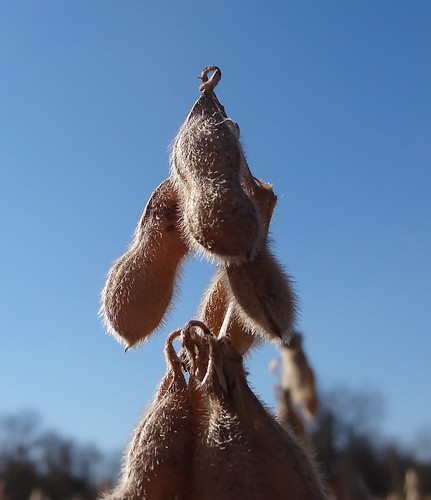
Soybean pods Abbeville Co, SC, sooc
Soybean pods (legumes) against a November sky. Abbeville County, South Carolina.


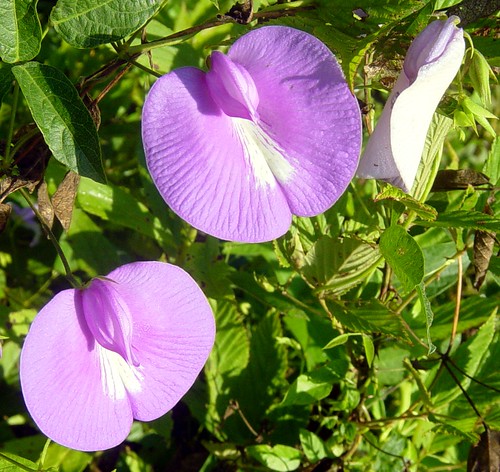
Purple wild peas
Purple flower of wild pea plant, Pickens County, South Carolina. (Both photos are links to the originals, in my Flickr photostream.)

The photos above are of just two representatives of the enormous, and enormously important, pea family, also known as legumes, or Fabaceae. Why are they important? Let me count the ways. Rather, let me list just some of the members of this family:

peanuts
soybeans
beans (many kinds)
peas (many kinds)
clover (many kinds)
alfalfa
carob
licorice

Peanuts and soybeans are important crops. According to this source, we exported $16 billion worth of soybeans and soybean products in a recent year. See here for the Wikipedia article section on soybean use. Uses include oil, tofu, edamame, and many other food uses. Peanuts are also noted for having many uses, including, of course, peanut butter. See here for the Wikipedia reference. Beans and peas, of many kinds, are eaten in many ways. Alfalfa and clover are important cattle food. Clover is used as an ornamental, too.

One reason that the members of this family are so important in human diets is that the family is rich in protein. One reason for that is that the plants have nodules on their roots, where Nitrogen-fixing bacteria live, in a mutually beneficial association with the peas, beans, etc. There is some gaseous Nitrogen in the air, and there is air in the soil, usually. The bacteria take some of this Nitrogen, and change it into amino acids, which are the building blocks of protein. Glycine is one of the amino acids. Glycine is also the scientific name of soybeans. Since we must have protein for almost every biological function -- it's essential for all of our cells -- having a source of protein is critical for human diets, and members of the pea family are good sources of protein. Vegetarians, and people who can't afford to eat meat, generally eat beans and peas and other members of the pea family as protein sources.

It is probable that Daniel and his friends persuaded the Babylonian officials to let them eat members of the pea family, as part of their diet, rather than the meats the rest of the trainees ate. The Prodigal Son was probably feeding carob pods to the pigs. Carob is used to make a chocolate substitute.

I'm thankful to God for the bounty of the pea family! Thanks for reading.

Friday, November 11, 2005

C. S. Lewis (and Tolkien) and biology

Let me make one thing perfectly clear. I appreciate the writing of C. S. Lewis, and have been deeply influenced by it, I hope. As evidence, I cite my article on the bioethics of C. S. Lewis, which was published in hard copy, and has been posted, by the American Scientific Affiliation, which I appreciate. (They did so without mentioning my affiliation with SWU, because I was on sabbatical at Bryan College when I presented this to the annual meeting of the ASA. I am grateful to both institutions.) Unfortunately, there was an error in scanning the document. "o, n bod % *" should be "own body." As more evidence, I posted, earlier this year, a series on temptations in the Narnia books (see here for last post). I subscribe to, and read, Arevanye's C. S. Lewis blog.

Here's another thing to make clear: If you think reading any criticism of the details in Lewis' books would spoil your future reading of his works, don't read this post any further.

A third clarification: Please remember that this blog is subtitled "musings . . ." That's what this post is.

I found Lewis in the children's section of the University of Wisconsin library, around 1960. Perhaps I should have been studying for my courses, or working on my research, but I'm glad I found the Narnia books. I have read them many times. I look forward with mixed feelings to the forthcoming film based on the series.

Lewis has been criticized, I believe by Tolkien, for one, for not being careful with details. (If anyone out there can put a reference for this in a comment, I'd appreciate it! Thanks in advance.)

Here are some of the details that don't ring true to me.

1) No females. I know, there are females on Mars, in Out of the Silent Planet, and female characters have strong roles to play in Perelandra, That Hideous Strength, and the Narnia books. Till We Have Faces is narrated by the main character, a female. But there are strange gaps. There don't seem to be any female dwarves, or marshwiggles, or earthmen, in the Narnia books.

2) Populations too small. Aslan could, of course, maintain them, no matter how small. But, in Prince Caspian, there seem to be just a handful, or even less, of hags, bears, badgers, werewolves, and others. There are a number of real species of organisms on current real endangered lists, with more than a handful of members. Inbreeding, accidents, and the like take their toll. Species can't be expected to survive with numbers as small as Lewis implied.

3) Food and supplies. Authors often neglect this. I probably would, too. Most fiction works are not about agriculture or commerce. But, for example, how does the giant house, Harfang, heat itself? Lewis describes profligacy in heating it, from wood fuel, but Harfang is in the middle of a "desolate, rocky plain" (The Silver Chair, New York: Macmillan, 1953, p. 78) which is apparently treeless, and Jill, Eustace and Puddleglum spent all morning and part of the afternoon getting to it from where they first saw it, with no suggestion that they went through a forest. There is mention of hunting parties, but none of wood-seeking parties.

Where did Tumnus shop? There is no mention of any market, or even building, in the first part of The Lion, The Witch, and the Wardrobe, save the castle of the witch.

How did Narnia survive the long winter caused by the witch? Such a winter would have cut off almost all agriculture, grazing, etc.

4) Paths under the ocean. The sea-people in The Voyage of the Dawn Treader are described as riding something like sea-horses, which swim. Presumably they do, too. Lucy sees paths at the bottom of the ocean, used by the sea-people. Why would they need paths, or how would they even make them?

Some parallels between Tolkien and Lewis's subcreations:

1) Both of them had some female characters, but both of them seemed to have whole populations with no females. (I'm not including the Ents.) Though Tolkien wrote that it was difficult or impossible for non-dwarves to differentiate the sexes, he mentions only one female dwarf, Dís, Thorin's sister, in the trilogy, The Hobbit, or The Silmarillion, and she was a very minor character. (Besides my memory, see the entry on her in The Encyclopedia of Arda.) I don't recall any evidence of female orcs at all.

2) Both of them created flat worlds.

3) Both of them had an interest in stars. In The Last Battle, Jill Pole is described as being very familiar with the stars as guides. Frodo and Sam saw a star while in Mordor, and this encouraged them. Stars are characters in The Voyage of the Dawn Treader, and Elrond's father became a star, or at least a beacon in the sky, in Tolkien's world.

4) Both of them created worlds that, in many ways, were medieval. Horses, armor, swords and spears and bows and arrows, castles, or at least castle-like buildings, all abound.

5) I really wonder how Mordor, a desert waste, but with vast hordes of various kinds of beings in it, was provisioned.

Crumbolst has posted some insightful commentary on The Lion, the Witch, and the Wardrobe, which sort of considers the same ideas as I am here.

I previously posted on my own article, but thought, as the time for the opening of the movie based on the first book in the Narnia series approaches, that it made sense to do so again. This post is not a duplicate of the former one.

Thanks for reading!

* * * * *

Added Jan 22, 2008: A subsequent post, responding to a comment on this one, may be found here.