License

I have written an e-book, Does the Bible Really Say That?, which is free to anyone. To download that book, in several formats, go here.
Creative Commons License
The posts in this blog are licensed under a Creative Commons Attribution-NonCommercial-ShareAlike 3.0 Unported License. You can copy and use this material, as long as you aren't making money from it. If you give me credit, thanks. If not, OK.
Showing posts with label cells. Show all posts

Friday, June 17, 2022

Water, Hydrogen, and Oxygen, and where we get our energy


The above equation is a simple way of showing what happens during photosynthesis. There are more detailed ways to show it. Photosynthesis is a complicated process, or processes. But, at its heart, it may be summarized simply.

As you know, there's a lot of water on the earth. As you also know, water consists of two elements, Hydrogen and Oxygen. As you may not know, the energy you need is intimately connected to water. I'm using energy to type this, and you are using energy to move your eyes as you read it. What's that got to do with water?

Our food comes from photosynthesis. Green plants absorb light, and produce various molecules that we use as food, such as starches, sugars, several vitamins, and proteins.

 Light energy is used to split water, and the Hydrogen split off is then available for the manufacture of Carbon-containing molecules, like glucose, food molecules, which can be stored, broken down to release energy, or moved to parts of the organism where they are needed. Some of the need is to release energy. Most foods you buy at a grocery store, or a restaurant, come with a calorie number. That number indicates the amount of energy you would expect to get if you ate and digested that food. The energy comes from energy-storing molecules, like glucose. The Carbon-containing molecules, which have Hydrogen added to the Carbon, may also be used to produce important molecules like enzymes, vitamins, hormones and proteins. (Oxygen, Nitrogen, Sulfur and other elements may be added to a Carbon-based structure.)

Organic molecules, like glucose, will burn. Burning uses Oxygen to carry on combustion. There is a process, used by nearly all organisms, called cellular respiration. That process also uses Oxygen to create water, and, in the process, releases energy for use in our cells. So, putting it very simply, photosynthesis uses light energy to break water, and cellular respiration puts water back together, and releases energy.

I'm bald-headed. So lots of light hits my head. My cells, like yours, have lots of water. So why doesn't that light, on my scalp cells, split water and make glucose? The answer is that various helping molecules, molecular tools, as it were, are necessary for photosynthesis to occur. These include chlorophyll and several enzymes, which I don't have in my scalp cells.

Isn't God great? Thanks for reading.


Monday, August 12, 2013

Do your cells belong to you? Maybe they do. Henrietta Lacks descendants recognized as having rights

Henrietta Lacks was a poor black woman who had cervical cancer, and eventually died of it, in 1951. Some cells from this cancer, taken without her consent, have been used in research for decades. It has been estimated that laboratories have many tons of cells derived from Mrs. Lacks. Some of those cells have been found in cell cultures supposed to have been free of them. The cells are known as HeLa cells, and I was taught, when in graduate school, that they were from a Helen Lane. Not so.

I have previously posted about this situation, especially about a book on the story, by Rebecca Skloot, entitled The Immortal Life of Henrietta Lacks. The Lacks story has ethical, medical, racial and other interesting aspects.

There is recent news. The Lacks family has now been given some voice in the use of the cells from their grandmother. See here and here for news stories on this matter. It's about time!

Friday, January 13, 2012

How do you understand a tree?

How to you understand a tree? There are many ways of doing so.

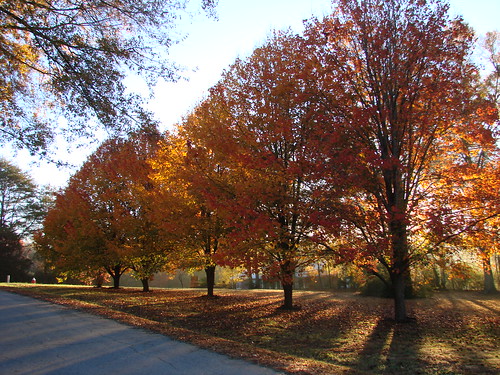
Row of Bradford pear trees in morning sun
The above photo, of Bradford pear trees in morning sunlight, is from my Flickr photostream. The photo is a link to the original, which is posted there.

Back when I was a college biology professor, I would occasionally say something like this:

One way to understand a tree is to stand under it. You can listen to the wind blowing through the branches. You can feel the bark, and you can look at the leaves. You can watch for insects and spiders climbing up and down it, and look for birds and squirrels nesting in it. You can try to imagine the life of the tree, through years of growth, in various conditions. You can thank the tree for making shade, which can make life more comfortable, and for giving off Oxygen, which we can breathe. For many trees, you can also thank the tree for its fruit. You can thank it for its beauty during the various seasons of the year.

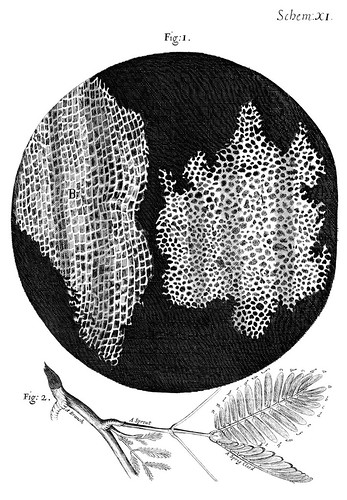
cells in cork oak from Robert Hooke
The picture above is, in part, of cells. It is from a public domain drawing of a microscopic view of part of the bark of a cork oak tree, by Robert Hooke, who named cells because of what he saw -- a resemblance to prison cells.

There's another way to understand a tree. You can take a core sample, and count the rings of annual growth, and make guesses about why some years' growth was larger than others. You can examine sample cells under a microscope, study its biochemistry with various analytic devices, measure the light absorption of the leaves, and count the root branches -- and, if you like, you can take the square root of that number!

Which of the two ways is better? That depends on what you are trying to accomplish, or what you need. Both ways have validity, with a legitimate purpose behind them. The first way can be called holistic, or wholistic. (See Wikipedia on holism.) It may help us to appreciate a tree in ways that the second sort of methods does not. An artist or poet, or a landscape architect, an ecologist, or a property owner, should use the first method.

But the second method is also legitimate. That way can be called reductionistic. As the Wikipedia article referred to above says, "Reductionism in science says that a complex system can be explained by reduction to its fundamental parts. For example, the processes of biology are reducible to chemistry and the laws of chemistry are explained by physics." (See also the Wikipedia article on reductionism, which is a complex subject!)

A wholistic examination of a tree would never discover an explanation for certain processes, such as how water gets to the leaves from the roots, or how photosynthesis works. It would probably not discover that certain medicines could be derived from parts of a tree. Science mostly uses reductionistic methods, so much so that some biologists may be accused of not knowing what the organism they are studying looks like -- they only study cell cultures, or enzymes, or DNA sequences.

The Psalmist said, about a righteous person:
He will be like a tree planted by the streams of water,
that produces its fruit in its season,

whose leaf also does not wither.

Whatever he does shall prosper. (Psalm 1:3, World English Bible, public domain.)

Both methods of looking at trees, or tarantulas, or trout, have their value, and neither method should be ignored or despised at the expense of the other. God presumably looks at trees in both ways, better than we could possibly do so. He has given us the ability to look at trees in both ways. Some of us have talent as photographers, or poets, and some as molecular biologists or geochemists.
One of my daughters gave me a book for Christmas. Soon after starting it, I came across a passage entitled
"I CONSIDER A TREE," and found that the author had thought many of the same thoughts that I had, and more deeply. Martin Buber said this (and more):

I can perceive it as movement: flowing veins on clinging, pressing pith, suck of the roots, breathing of the leaves, ceaseless commerce with the earth and air -- and the obscure growth itself.
I can classify it as a species and study it as a type in its structure and mode of life.
I can subdue its actual presence and form so sternly that I recognise it only as an expression of law -- of the laws in accordance with which a constant opposition of forces is continually adjusted, or of those in accordance with which the component substances mingle and separate.
. . .
It can, however, also come about, if I have both will and grace, that in considering the tree I become bound up in relation to it I and Thou, translated by Ronald Gregor Smith. New York: Scribner Classics, 2000. pp. 22-23.

I have posted on trees before, here. Thanks for reading.

Saturday, February 06, 2010

Do your cells belong to you? Maybe not

The New York Times has published (only on-line, but print will be available soon) a review of The Immortal Life of Henrietta Lacks, which looks like it's going to be an important and interesting read.

Who was Henrietta Lacks, and why is she immortal? Henrietta Lacks was a poor black woman who died of cervical cancer in 1951. However, some cells from the cervical cancer that killed her -- literally tons of them -- are still dividing, and metabolizing -- alive, by many biological definitions.. See here for the Wikipedia article on these cells. Neither Mrs. Lacks, nor her family, gave permission for this use, and the family didn't even know about it for over a quarter of a century. Apparently, this could happen to your cells, or mine, according to the book review, and the Wikipedia article. The book is said to cover the life of Mrs. Lacks, and of her children, the science, and the ethical issues.

The first link in this post has a few photos of the Lacks family. Amazon has an extensive page on the book, linking to some podcasts by the author, Rebecca Skloot.

Thanks for reading!

Monday, March 23, 2009

You aren't the same as you were yesterday . . .

. . . but you think you are.

Cells are dying all the time in your body -- and most of them are being replaced at a tremendous clip. (Even brain cells turn out to regenerate themselves far into adulthood.) And yet somehow, despite that enormous cellular turnover, you still feel like yourself week to week and year to year. How is this possible?
(Steven Johnson, Emergence: The Connected Lives of Ants, Brains, Cities, and Software. New York: Scribner, 2001, p. 83)

I don't really know the answer to that one. Sorry. But part, maybe all, of the answer, may be that our self, whatever that is, is not wholly material. It depends on something besides our neurons.

Thanks for reading.

Wednesday, January 28, 2009

Sunspots 196


Things I have recently spotted that may be of interest to someone else:


Humor:
A Reasonable Imagination has some advice, from (fictitious) publishers, to St. Augustine on the manuscript of his Confessions, and for C. S. Lewis on the manuscript of his Miracles: A Preliminary Study. Unfortunately, it rings true.

Science:
We still don't know everything. Surprise! Carl Zimmer writes about "vaults," tiny cell parts (organelles) that seem to be found in most living things. We don't know what they do. They may have some relationship to cancer. Zimmer has another post about vaults here. There is a brief Wikipedia entry on the subject.

The Food and Drug Administration has approved a trial of embryonic stem cells in paraplegic humans, says Wired. The cell line used was one of those approved by President Bush in August, 2001

Music:
An article about Anthony McGill, who played clarinet (with some other luminaries!) for the inauguration of President Obama.

Christianity:
Heart, Mind, Soul and Strength continues her thorough study on prophecies in the gospels, and their fulfillment.


Image source (public domain)

Monday, November 19, 2007

Dare I say it? I'm thankful for carbohydrates

I'm thankful for carbohydrates! I know, carbohydrates have gotten a rather bad reputation. There have been fashionable diets that tried to eliminate them. In fact, this Wikipedia article on carbohydrates says that they are not absolutely needed in our diet -- we can get the energy and nutrients we need entirely from other sources. So why be thankful for carbohydrates?

Well, for one thing, I like sugar and sweet things. Sugars are carbohydrates. So are starches, which are complex molecules made from many sugars. Starches are broken down into sugars as part of digestion. Some of that digestion takes place in the mouth, and mouth-digested starchy foods can taste sweet.

For another, much more important reason, carbohydrates are the first usable food products of the processes that make up photosynthesis, the amazing, and absolutely essential activity that turns water, carbon dioxide, and light into food. Carbohydrates are also turned into almost every other organic molecule in living things, by metabolism. The D in DNA stands for deoxyribose, a sugar. Amino acids, which make up protein, are synthesized, directly or indirectly, from molecules produced in making or breaking down sugars in our cells, or the cells of other organisms. Vitamins, steroids, and other critical cell components are made from carbohydrate raw materials. Plants use cellulose, a carbohydrate, for much of the structure of their cell walls. Lignin, synthesized from carbohydrates, makes up most of the rest. Without cell walls, plants wouldn't have the essential structures that they do, such as roots, stems, flowers and leaves. (Cell walls are also a major constituent of cotton and other natural fibers, and of paper.) In other words, without carbohydrates, life as we know it would be impossible.

Jesus said, in the Lord's prayer, "Give us our daily bread." Bread was an essential part of the diet of people of Bible times. David brought loaves of bread to the army. Bread was put out as a sort of offering in the Tabernacle. Bread contains carbohydrate. However, it also has protein, fiber, important minerals, and other things we ought to take in.

Sure, I can eat too many carbohydrates, and be a sugar glutton, but, all in all, I'm thankful to God for carbohydrates. Thanks for reading.

This post was expanded on November 24, 2018.

I have posted about other things I am thankful for, probably including carbohydrates, at other times. See here and here for links to these posts.

I'm also thankful to you, my reader!

Tuesday, October 16, 2007

"The Inner Life of the Cell" video

"The Inner Life of the Cell" video, which, as I understand it, was created at Harvard, is available freely on the Internet, here, lasts perhaps 3 minutes, and is certainly well worth watching. It shows various animations of life processes involving molecules and cells, with no narration at all. Even if you don't know what process is being shown, it is an awesome piece of work, and gives some idea of the tremendous complexity and beauty of molecular and cellular structure. According to my sources, some people have used in devotional presentations. The sponsor, the Howard Hughes Medical Foundation, is not a religious organization.

Thanks for reading. Enjoy watching.

Saturday, November 25, 2006

Why do living things have cells?

Why do living things have cells? Good question. I begin with three introductory remarks.

1) A cell is a building block of living things, surrounded by a membrane, which serves as a boundary. Cells were first named such by Robert Hooke, who saw a resemblance between cork tissue he looked at in a microscope (see here for picture), and the cells in a monastery. The cell theory is the idea that all living things are made of cells, and that these cells came from other cells, which existed before them. The cell theory dates to the 18oos.

2) Strictly speaking, not all living things do have cells. Most bacteria, and some other organisms, are made of only one cell, not cells.

3) What is meant by "Why"? Good question. There are several meanings, and several possible answers. One of the meanings is "What is the cause?" One answer is that I have cells because my parents did. Another meaning, and answer, would be that "Organisms have cells because God designed living organisms in this way, or because pre-organisms which had cell-like structures were selected over pre-organisms that didn't." There are theories about the origin of cells from non-living things by evolutionary processes. As would be expected, even if this is the way things came about, there is little or no hard evidence for this. It is possible that God used evolutionary processes to bring about His design for living things.

Another meaning is "What is the function of cells?" As interesting as are the other meanings of "Why?", this is the meaning I am using in this musing. Another way to put it is "What good does the possession of cells do living things?"

I have dealt previously with another basic biological question, namely "Why is there sex?"

OK, why? The answer seems to be that cells allow for specialization. Cells, tiny units, more or less self-sufficient, can have many different functions in the same organism. Most likely, the cell arrangement, wherein discrete units exist, somewhat disconnected from the other units, makes the extreme specialization necessary for our existence possible in a way that having one part of a seamlessly connected whole perform a specialized function could not.

And cells are specialized. For example, some skin cells seem to mostly be there just to act as a barrier between the organism and what's outside of it. Antibody-producing cells seem to manufacture only one particular antibody, helping to fight off only one type of invader each. Neurons (nerve cells) don't produce eye pigment, or secrete digestive enzymes, or carry Oxygen. They transmit messages, sometimes over long distances.

Each of these cells is part of one single organism. Each of these cells (except the antibody-producing cells, where there is some variation) has the same genetic information. But different parts of the genetic information are expressed in each different type of cell.

I'm made up of trillions of cells, and trillions more of my cells have died since my conception. I'm glad for all of them. Here's a web page, from the Howard Hughes Medical Institute, answering the same question that I have.

Thanks for reading. I hope to post on being thankful for cell division in a day or two. To see another post on scientifically oriented gratitude, go here.

*   *   *   *   *

August 5, 2013. Upon looking at this post after a few years, I decided to add something: There's another way in which having cells helps organisms. It is related to something called the surface to volume ratio. What is that? Suppose you compare three pieces of jello -- each one containing the same amount of jello, in other words, the same volume. Further, for simplicity, suppose that the jello forms a cube, 4 units of length on a side. Inches, centimeters, pick your unit. OK. What's the surface area of such a piece of jello? It has six sides, and each side is 4 x 4 units squared in area. So, the total surface is 6 x 4 x 4 = 96 units squared. Now, lets take the second piece of jello. This time, we'll imagine that it is sliced across, such that there's a top half, and a bottom half. Then, we slice it again, twice, down from the top, at right angles, so that the piece of jello is now made of eight smaller cubes, each 2 x 2 x 2 units, four on top, four on the bottom. The volume remains the same. What's happened to the surface? The total surface is now the total of the surface of 8 cubes, each with 6 sides, each side 2 x 2, so that the total surface is 8 x 6 x 2 x 2, and the total surface is now 192 units squared.

Then, imagine that the third piece of jello is cut so that there are four layers of 16 small cubes, 1 unit on the side. The total surface will be 4 x 16 x 6 x 1 x 1 = 384 square units. The surface to volume ratio increases, as the object is divided into smaller subunits.

What's the point? The point is that, as a volume is divided into smaller and smaller subunits, the volume acquires more and more surface area. This is true whether the subunits are cubes, spheres, or of some other shape. If the volume is a living organism, that organism would have more surface, to absorb external material (such as Oxygen or water) and, also more surface area to expel unwanted wastes, if divided into cells.

As aside - I once saw a nestful of baby killdeers fall off a two-story building. Their parents had raised them from eggs on the roof. After a brief period of recovery, they ran off, unfazed. If I had fallen off, I wouldn't have been unfazed. An elephant would have likely have been more seriously injured. Why? At least partly because a small bird has more surface per volume than I do, hence, more air resistance. An elephant, or a whale, has even less external surface per volume.

Thanks for reading.